
Press release · August 7, 2026
“First Year They Sleep”: Valor Villages Bets on Slow Repair
Horticulture retraining program pairs quiet-by-design vocational training with a tallgrass prairie restoration and a planned green roof.
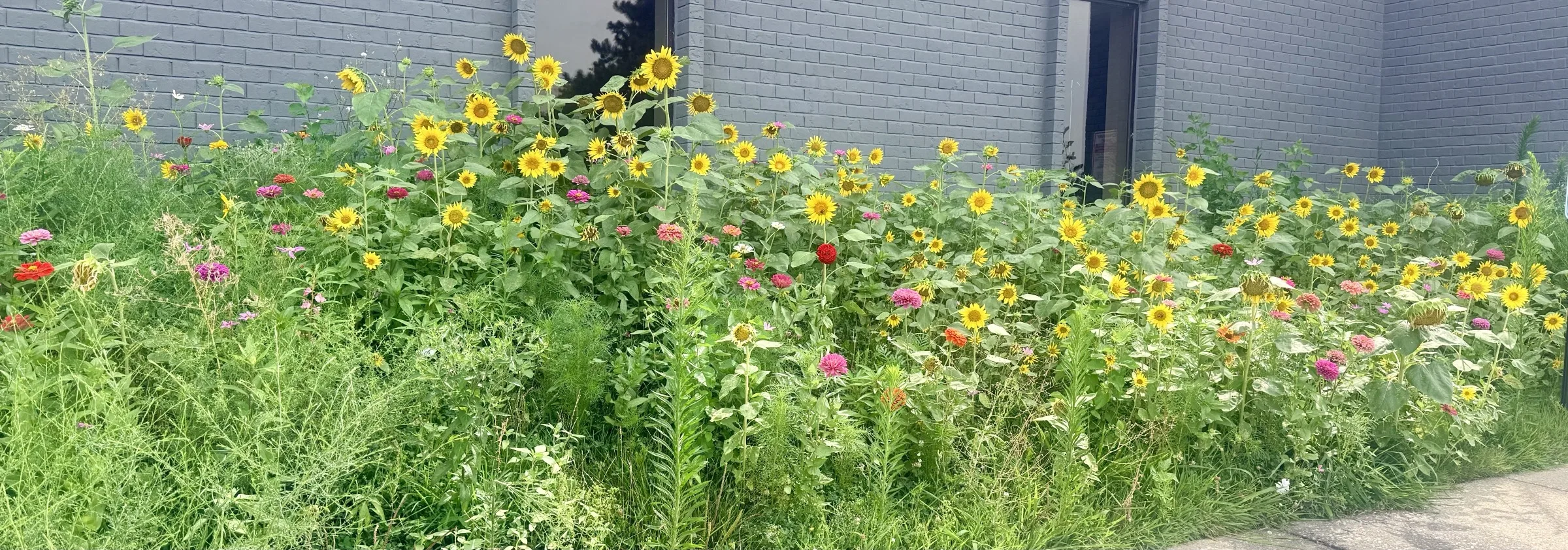
A new horticulture retraining program pairs quiet-by-design vocational training with a two-tenths-of-an-acre restoration of historical Missouri tallgrass prairie and a planned green roof on the Woodson Road building.
Why a medical practice planted a prairie
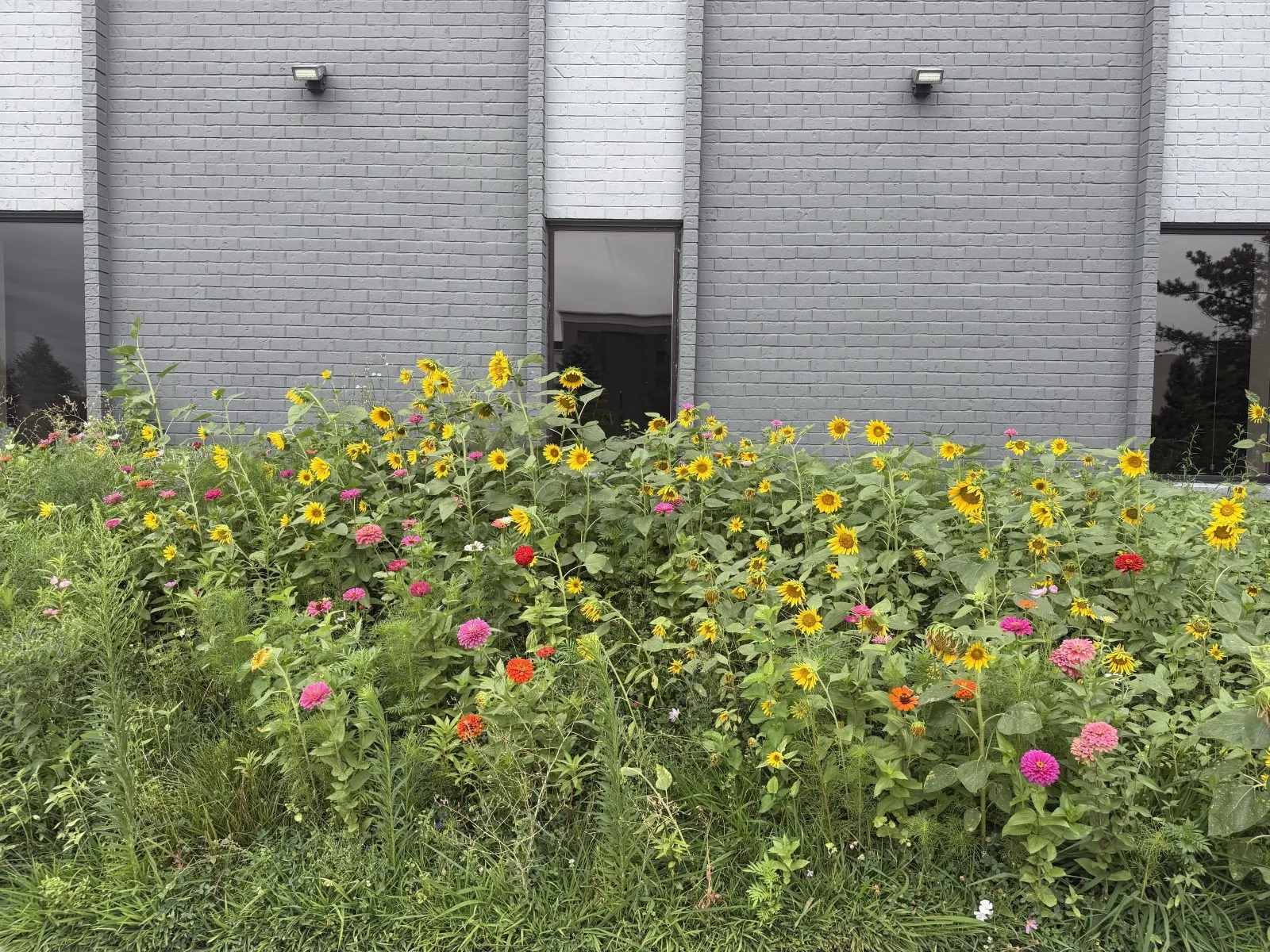
The prairie sits directly outside the treatment room windows. It is not landscaping. It is a vocational training site, working green infrastructure, and a teaching device about the nature of repair.
A restored prairie in its establishment year looks patchy, weedy and unfinished, while the actual work happens underground in root systems nobody can grade. The most common way a young prairie dies is that somebody lost patience with how it looked and reached for the mower.
“Two years in, nobody is asking about the weeds.”
— Dr. Gurpreet Singh Padda, MD, MBA, MHP, chief medical officer of Valor Villages
Quiet by design
The training environment was chosen for its quiet, and that is a clinical decision rather than an aesthetic one. Veterans with PTSD are twice as likely to carry a hyperacusis diagnosis — a clinical intolerance of ordinary sound (adjusted odds ratio 2.00, 95% CI 1.87–2.14). Most entry-level work available to people leaving treatment is loud, crowded and unpredictable, which is precisely what a hyperaroused nervous system cannot tolerate.
A trade with real demand
Grounds maintenance is one of the few substantial occupations that can be entered without a formal credential. The US Bureau of Labor Statistics projects roughly 171,600 openings a year nationally through 2034.
Trainees learn site preparation, native seeding and plug planting, establishment-year weed discrimination, seasonal maintenance, and the installation and upkeep of an extensive green roof system. Veterans trained on the site will install and maintain both the prairie and the roof.
The ground itself
Missouri once held roughly 15 million acres of tallgrass prairie — about a third of the state, and nearly half of present-day St. Louis. Fewer than 45,000 acres of original prairie survive. Native prairie roots reach as deep as 15 feet, and a US Geological Survey study found a prairie rain garden in clay soil retained and infiltrated 100 percent of all precipitation and snowmelt across water years 2004–07, against 96 percent for the turf equivalent.
What the evidence does and does not show
The strongest controlled evidence for horticultural therapy is a randomized trial of 211 psychiatric inpatients published in Scientific Reports in 2024, which found significantly reduced anxiety versus standard care at four weeks (p < 0.001). That was not a veteran population and not a PTSD trial. Separately, a pilot evaluation in veterans with a history of suicidality found reductions in stress, depression, pain and loneliness — a pilot, described as one.
The film
Watch “First Year They Sleep”
The full documentary short, with transcript.
Read the release as distributed
This announcement was issued by Valor Villages and distributed nationally through EIN Presswire. The canonical full text lives there:
Read the full release on EIN Presswire →
Media contact for Valor Villages: Amanda Reynolds, Executive Director — (314) 714-0902, amandar@valorvillages.org. For clinical or Valor Medica inquiries, contact info@valormedica.org.