
About
Our impact
Concrete things built, and the evidence behind the programs — with every figure’s source named.
Built
What exists because of this partnership
8
veterans housed at Valor #1 Housing — four women, four men, in two units.
Opened November 2025 with The Hunt Foundation
0.2 acre
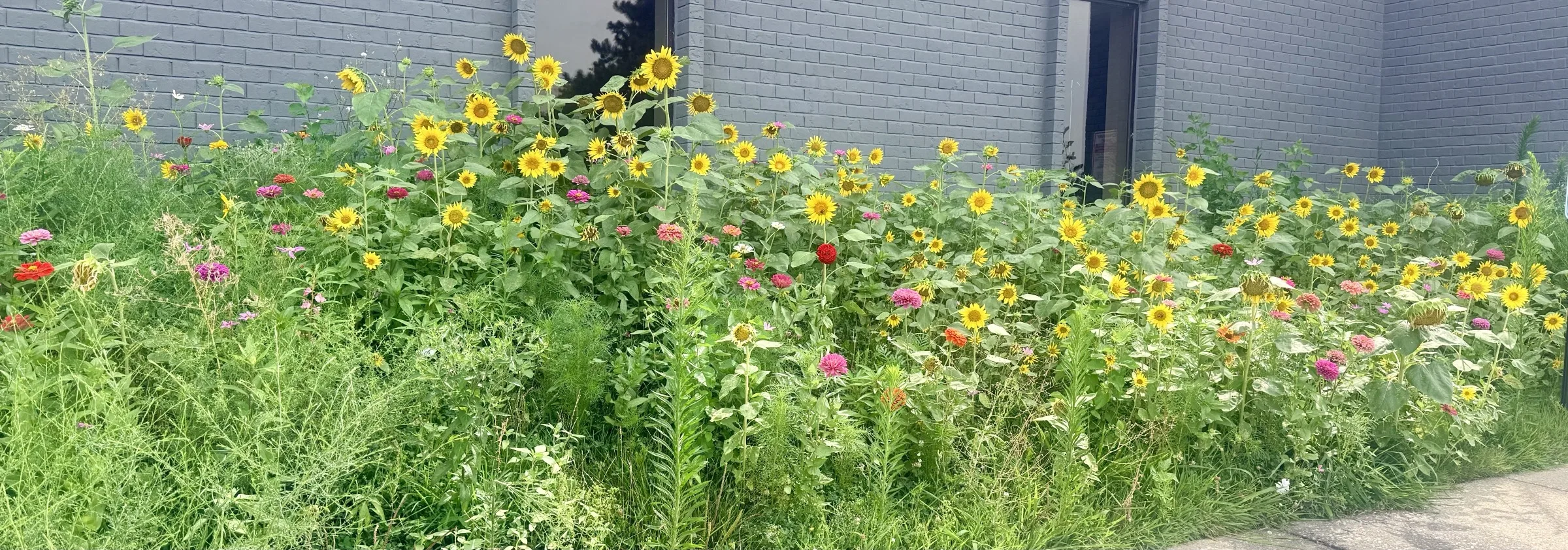
of historical Missouri tallgrass prairie restored as a working vocational training site.
Planted 2026
1
planned extensive green roof on the Woodson Road building, to be installed and maintained by trained veterans.
In planning
24 beds
sought by Valor Villages’ separate children’s home campaign, which we support clinically.
Building Bright Futures campaign
Why this design
The training site is quiet on purpose. That is a clinical decision.
2.0×
the odds of a hyperacusis diagnosis in veterans with PTSD — a clinical intolerance of ordinary sound, not a preference.
Adjusted OR 2.00, 95% CI 1.87–2.14
171,600
annual openings for grounds maintenance workers nationally through 2034, with no formal credential required to enter.
US Bureau of Labor Statistics, Occupational Outlook Handbook
p < 0.001
reduction in anxiety from horticultural therapy versus standard care at four weeks, in 211 psychiatric inpatients.
Joubert et al., Scientific Reports 2024;14:14378 — not a veteran or PTSD population
The ground
Restoring something Missouri almost entirely lost
15 million
acres of tallgrass prairie once covered Missouri — about a third of the state, and nearly half of present-day St. Louis.
Missouri Department of Conservation
<45,000
acres of that original prairie survive today. More than 99 percent is gone.
Missouri Prairie Foundation
100%
of precipitation and snowmelt infiltrated by a prairie rain garden in clay soil, against 96% for the turf equivalent.
US Geological Survey SIR 2010-5077, water years 2004–07
385,000
acres targeted over two decades by Missouri’s monarch and pollinator plan — the first such statewide plan in the nation.
Missouri Monarch and Pollinator Conservation Plan, 2016
The monarch butterfly was proposed for listing as threatened by the US Fish and Wildlife Service in December 2024, with a modeled extinction probability of 56 to 74 percent for the eastern migratory population over 60 years. A final rule remains pending.
Questions about these numbers
Why don’t you publish a number of patients treated?
Because we will not publish a number we cannot substantiate. Program-level counts are being compiled and will be posted here when they are verified rather than estimated. Every figure on this page today is either a third-party statistic with its source named, or a concrete fact about what the partnership has built.
There is more on this in The Prairie Restoration.
Is the horticultural therapy evidence from veterans?
No, and it matters. The strongest controlled evidence we rely on is a randomized trial of 211 psychiatric inpatients published in Scientific Reports in 2024, which found horticultural therapy significantly reduced anxiety compared with standard care at four weeks. That was not a veteran population and not a PTSD trial. Separately, a pilot evaluation in veterans with a history of suicidality found reductions in stress, depression, pain and loneliness — but it is a pilot, and we describe it as one.
The mechanism is covered in Horticulture Retraining.
What does the prairie actually do, environmentally?
Native prairie plantings develop root systems reaching as deep as 15 feet, which changes how ground handles water. A US Geological Survey study of rain gardens found the prairie rain garden in clay soil retained and infiltrated 100 percent of all precipitation and snowmelt across water years 2004–07, while the turf equivalent in the same soil retained 96 percent. Deep-rooted shrub and prairie plantings have been measured increasing soil saturated hydraulic conductivity by up to 25 times relative to turfgrass.
That is the subject of “First Year They Sleep”: Valor Villages Bets on Slow Repair.
Is the green roof built?
Not yet — it is planned, on the Woodson Road building, and veterans trained on this site will install and maintain it. It is designed as an extensive green roof, the type the US Environmental Protection Agency associates with roughly a 60 percent reduction in stormwater runoff.
Horticulture Retraining explains what that looks like.
Help us build year two
Gifts to Valor Medica fund clinical care, outreach and the vocational training program described on this page.