
Programs
Horticulture Retraining
Vocational training on a working prairie restoration — designed quiet, because for this population quiet is a clinical requirement.
The idea
Someone leaving treatment needs a place to work, in conditions that do not set off the alarm, while the clinical care continues elsewhere. Most entry-level work available to people in this position is loud, crowded and unpredictable — which is precisely the combination a hyperaroused nervous system cannot tolerate.
So the training site was chosen for its quiet, and the trade was chosen because it has real demand and no credential barrier.
What trainees work on
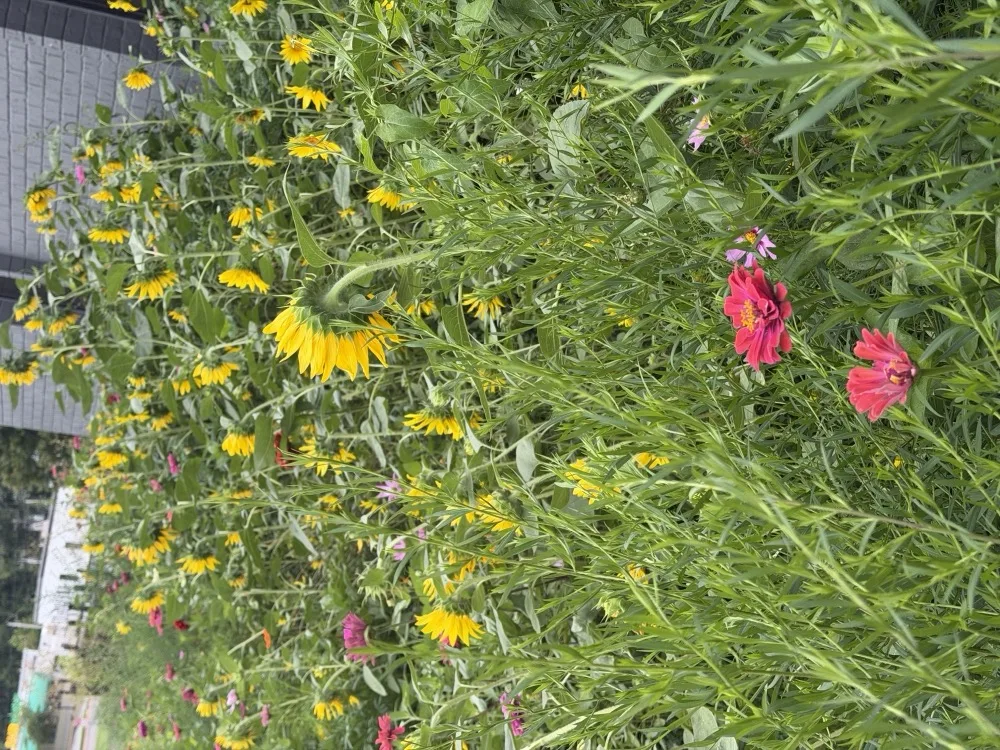
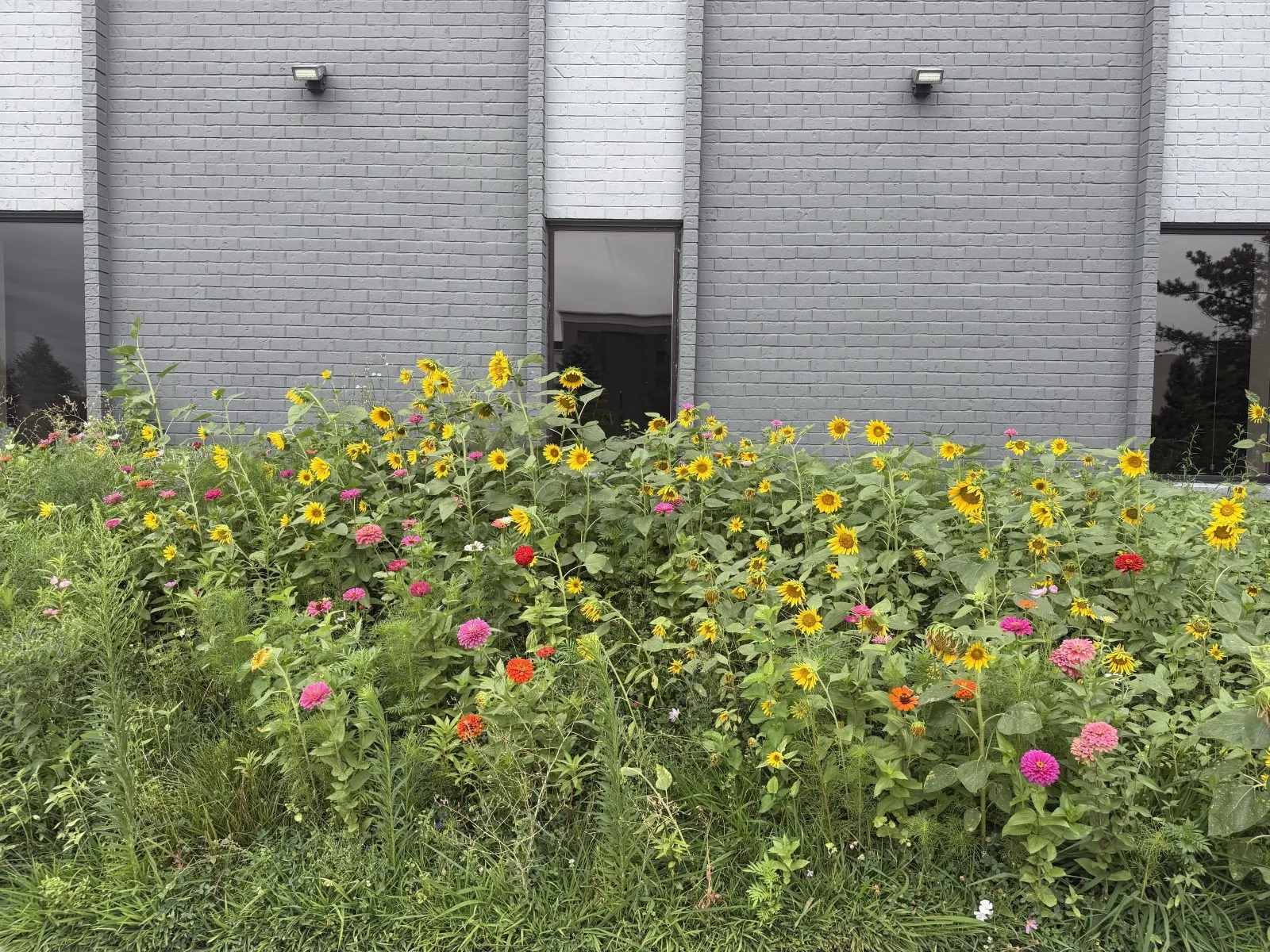
- A two-tenths-of-an-acre restoration of historical Missouri tallgrass prairie
- A planned extensive green roof on the Woodson Road building
- Seasonal maintenance across both, through a full establishment cycle
Veterans trained on this site will install and maintain both systems. That is the point — the site is not a demonstration garden, it is the job.
Why year one looks like failure
A restored prairie in its establishment year looks patchy, weedy and unfinished, while the actual work happens underground in root systems nobody can see. The most common way a young prairie dies is that somebody lost patience with how it looked and reached for the mower.
Trainees learn to tell an establishing prairie from a failing one — a genuinely difficult skill, and a useful thing to have practiced on something other than yourself.
171,600
annual openings nationally for grounds maintenance workers through 2034, with no formal credential required.
US Bureau of Labor Statistics, Occupational Outlook Handbook
2.0×
the odds of a hyperacusis diagnosis in veterans with PTSD — why the site is quiet by design.
Adjusted OR 2.00, 95% CI 1.87–2.14
p < 0.001
anxiety reduction from horticultural therapy versus standard care at four weeks, in 211 psychiatric inpatients.
Joubert et al., Scientific Reports 2024;14:14378 — not a veteran or PTSD population
Watch
The program, explained
Dr. Gurpreet Singh Padda, MD, MBA, MHP on the soil terrain, the human terrain, and why patience is the active ingredient.
Questions
Do I need experience?
No, and that is deliberate. Grounds maintenance work is one of the few substantial occupations you can enter without a formal credential — the US Bureau of Labor Statistics projects about 171,600 openings a year nationally through 2034.
This is set out in Our Impact.
Why is the site quiet?
Because for this population, noise is a clinical barrier rather than a preference. Veterans with PTSD are twice as likely to carry a hyperacusis diagnosis. A training environment built around loud machinery would exclude the people the program exists for.
The detail is in “First Year They Sleep”: Valor Villages Bets on Slow Repair.
Is this therapy or is it a job program?
Both, and we do not overstate either. The vocational side is real: it teaches installation and maintenance skills for prairie planting and green roofing. The therapeutic evidence is real but bounded — the strongest controlled trial is in 211 psychiatric inpatients, not veterans, and the veteran evidence is a pilot. See our impact for the sourcing.
What will I learn to do?
Site preparation, native seeding and plug planting, establishment-year weed discrimination, seasonal maintenance, and the installation and upkeep of an extensive green roof system.
This is set out in Our Impact.
Think this might be for you?
You do not need a referral and you do not need to prove anything first. Tell us what is happening and we will be honest about whether we can help.